Robot Vacuums in 2026: Start With LiDAR, Then the Dock
Robot vacuums in 2026: navigation first, then mopping. The guide to LiDAR vs camera, obstacle avoidance, docks, and the price bands that make sense.
By the Ask Versa AI Editorial Team. Ask Versa AI content is AI-assisted and editorially reviewed before publishing; specs and review sentiment are pulled live from Amazon.
Navigation Is the Whole Decision
There are now well over 150 robot vacuums on Amazon, priced from roughly $100 bounce-bots up to $1,400 mop-and-empty flagships, and every box promises "industry-leading suction" and "smart navigation." Most of that is noise. The single feature that decides whether the thing cleans well or just wanders is how it maps your floor.
Robots navigate one of three ways. LiDAR fires a laser to build an exact floor plan, lays down efficient back-and-forth rows, respects no-go zones, and keeps working in the dark. Camera-based vSLAM, common on iRobot Roomba, recognizes corners and furniture edges to build a rougher 2D map, more slowly, and it needs light. Random bounce just ricochets off walls and is mostly gone from anything over about $200 in 2026.
Comparing specific models? See our Eufy Omni C20 vs Roborock Q10 S5 head-to-head.
The owner consensus lines up with the tech. A long-running r/homeautomation thread from people who test dozens of bots sums it up: they "tend to prefer Lidar bots over VSLAM" because they map faster, navigate more accurately, and handle no-go zones better. Our take matches that. A mid-range LiDAR robot from Roborock, Dreame, or Ecovacs almost always out-cleans a similarly priced camera model, so treat LiDAR as the floor you build the rest of the purchase on.
Suction Numbers Lie, the Brush Doesn't
Every 2026 flagship pushes past 10,000Pa on the spec sheet, and every reviewer who measures real pickup finds the same thing: Pascals on paper do not equal clean floors. Pickup comes from the combination of suction, brush design, and airflow, so a 5,000Pa robot with a well-designed rubber brush roller beats an 8,000Pa robot with a basic bristle brush.
Skip the Pa figure. Look for rubber (not bristle) brush rollers, a dual-roller or anti-tangle system, and independent cleaning tests. That is the whole story on suction.
The Picks Reviewers Agree On
Six major roundups refreshed this year, RTINGS, Wirecutter, PCMag, CNET, Tom's Guide, and Consumer Reports, and their top picks overlap heavily. These are the ones that keep surfacing.
Best overall: Roborock Saros 10R
RTINGS names the Saros 10R the best robot vacuum they have tested in 2026, pointing to its multiple solid-state LiDAR sensors and strong obstacle recognition packed into a low-profile body. If you want one safe pick that cleans well and navigates reliably, start here.
Best for pet hair: Roborock Saros Z70
RTINGS' dedicated pet-hair guide picks the Saros Z70 as the best robot vacuum for pet hair they have tested, built for flagship hard-floor performance with minimal daily intervention. Vacuum Wars, which has run more than 150 robots through its tests, adds that the pet-hair essentials are strong suction, an anti-tangle brushroll, and high-efficiency filtration for dander.
The flagship argument: Roborock Qrevo Curv vs Roomba Combo j9+
If you want the full omni-dock experience, the two flagships reviewers argue about most are the Roborock Qrevo Curv (around $1,100) and the iRobot Roomba Combo j9+ (around $900). The Qrevo Curv leans on LiDAR mapping, sonic mopping, and an auto-wash, hot-dry dock. The Combo j9+ counters with the best carpet protection on the market, because its mop module physically retracts off the floor on carpet, plus its signature pet-waste avoidance.
This is the core of the roomba vs roborock 2026 question (see our Roborock S8 vs Roomba j9+ comparison for the previous-generation models still on sale), and we will not pretend it is a coin flip. If you have wall-to-wall carpet and pets, the Combo j9+ is the safer bet: the retracting mop keeps your carpets dry, and iRobot's P.O.O.P. guarantee is the thing that stops a bad day. On hard floors with light carpet, the Qrevo Curv is the stronger daily cleaner, because faster LiDAR mapping and a mop that washes itself outearn the carpet trick.
If you want the other flagship camp, our Roborock Qrevo vs Dreame X40 Ultra head-to-head covers the two brands reviewers argue about most.
Under $500: an older LiDAR model beats a new camera bot
You do not need flagship money. In the $300 to $500 range, prioritize a LiDAR robot with a self-empty dock and skip mopping if you mainly have hard floors or carpet. An older-but-current LiDAR model like the Roborock Q-series still cleans better than a brand-new camera bot at the same price — see how the Q10 S5+ holds up in our eufy Omni C20 vs Roborock Q10 S5+ comparison.
The Dock Is Now the Product
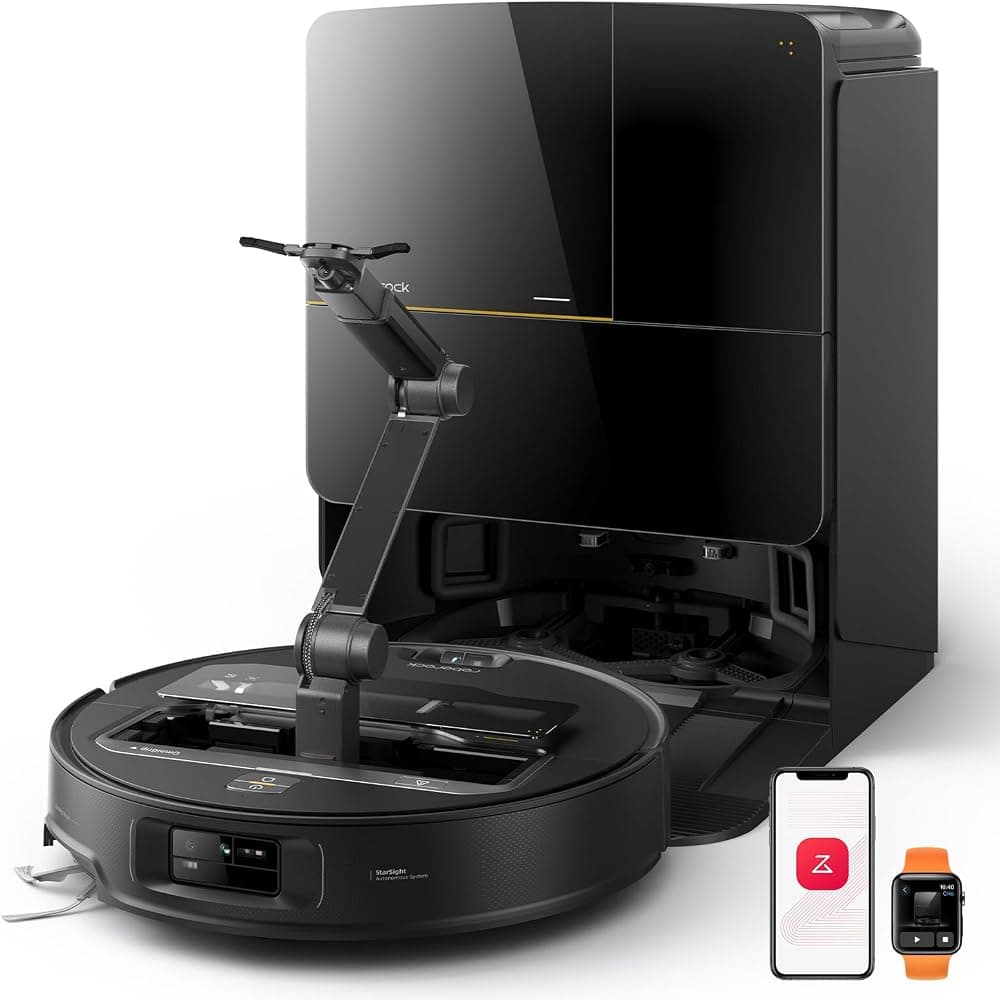
Here is where 2026 changed the conversation. A few years ago a robot vacuum was just the robot. Now the dock is what you live with every day, and the feature that turns the category from a chore into something you forget about is the self-empty base, which sucks the bin dry after each clean and holds 30 to 60 days of debris.
In 2026, reviewers at Vacuum Wars and Wirecutter treat a self-empty dock as near-mandatory above budget tier, and r/RobotVacuums owners list it as table stakes alongside decent mapping and obstacle avoidance. Budget the extra roughly $100 to $150. You will not regret it.
Then there is mopping, where the "omni dock" baseline shifted this year. The recurring point on r/RobotVacuums is that in 2026 "anything without auto mop washing is already feeling outdated." A dock that washes, dries, and refills the mop pad is the feature that changes daily use most, and the mop types run from best to worst.
So when a listing says "robot vacuum with mop," the question that matters is whether the dock washes and dries the pad. That is the line between a real time-saver and a gimmick.
Obstacle avoidance and pet waste
Does the robot avoid pet waste, cables, socks, and shoes, or smear through them? Flagships use 3D structured light, AI cameras, or both. iRobot's Roomba line is best known for its P.O.O.P. pet-waste avoidance guarantee, while Roborock and Dreame pair LiDAR with structured-light obstacle recognition. With pets, kids, or a cluttered floor, treat this as non-negotiable.
Qrevo Curv vs Combo j9+ at a Glance
| Feature | Roborock Qrevo Curv | Roomba Combo j9+ |
|---|---|---|
| Typical price (2026) | ~$1,100 | ~$900 |
| Navigation | LiDAR (fast, dark-friendly) | Camera / vSLAM |
| Mopping | Sonic, ~3,000 vibrations/min, auto-wash + hot-dry dock | Vibrating pad that retracts on carpet |
| Pet-waste avoidance | Strong (structured light + AI) | Signature "P.O.O.P." guarantee |
| Best for | Fast mapping, strong daily mopping | Carpeted homes, pet owners |
What to Ignore on the Box
The Costs That Arrive Later
The sticker price is not the whole story. Consumables add up, and 2026 owners flag recurring frustrations worth knowing first.
Over two years expect roughly $80 to $200 in consumables. Roborock and iRobot keep parts widely available, while obscure budget brands sometimes stop selling replacements, which effectively bricks the robot. Factor parts availability in before you buy.
A few real owner complaints worth carrying into the purchase, pulled from r/RobotVacuums, r/Roborock, and r/ecovacs. The Roborock LiDAR turret sometimes fails to retract properly, so the robot rams under low furniture or bar stools; measure your clearance. Ecovacs owners report the front wheel can break and is not easily user-replaceable, and that the dustbin can pack so tight the auto-empty dock fails to clear it. One r/RobotVacuums poster dropped nearly $1,000 on a Dreame X50 and regretted it, a reminder that spending more does not guarantee a better fit. Even on premium robots, long pet or human hair still needs occasional manual clearing from the roller.
Frequently Asked Questions
Is LiDAR worth it over a camera-based robot vacuum?
For most people, yes. LiDAR maps your home precisely, cleans in efficient rows, and works in the dark, while camera-based (vSLAM) robots map more slowly and struggle in low light. Reviewers and long-time owners on r/homeautomation consistently favor LiDAR bots for faster mapping and more reliable no-go zones, and a mid-range LiDAR robot usually out-cleans a similarly priced camera model.
Are self-emptying bases worth the extra cost?
Yes, for most buyers. A self-empty base turns a weekly chore into a roughly monthly one, and 2026 reviewers treat it as near-standard above budget tier. Budget for replacement dust bags if your dock uses them.
What is the best robot vacuum for pet hair in 2026?
According to RTINGS' 2026 pet-hair testing, the Roborock Saros Z70 leads the field for flagship hard-floor performance with minimal daily intervention. Vacuum Wars adds that the real pet-hair essentials are strong suction, an anti-tangle brushroll, good obstacle avoidance, and high-efficiency filtration, so a cheaper LiDAR bot with those traits can also be a strong pick.
Roborock vs Roomba: which brand is better in 2026?
There is no single winner, but we lean Roomba for carpet-and-pet homes, where the retracting mop and the P.O.O.P. guarantee both earn their keep, and Roborock for hard floors, where faster LiDAR mapping, stronger Pascal-rated suction, and a self-washing mop dock win the daily clean.
Is a robot vacuum with a mop worth it?
Only if the dock washes and dries the mop pad. On r/RobotVacuums, owners say that in 2026 anything without auto mop washing already feels outdated, because the omni dock is what makes mopping a real feature rather than a gimmick. A basic drag-mop robot is rarely worth paying extra for.
Where to Land
For most homes in 2026 the shape of a good purchase is the same: a LiDAR robot with a self-empty dock, and an auto-wash dock only if you have hard floors you want mopped. The Roborock Saros 10R is the safe overall pick, the Saros Z70 is the pet-hair pick, and the one fork worth agonizing over is carpet-plus-pets (Roomba Combo j9+) versus hard-floor daily cleaning (Roborock Qrevo Curv).
Two flagships can share every headline spec and still behave nothing alike on your floors. Hand their Amazon pages to Ask Versa AI and it pulls the mapping failures, the docking complaints, and the parts-availability gaps the listings will not show you.
Shop smarter with Ask Versa AI
Get occasional product-comparison tips and new features as they ship. No spam.