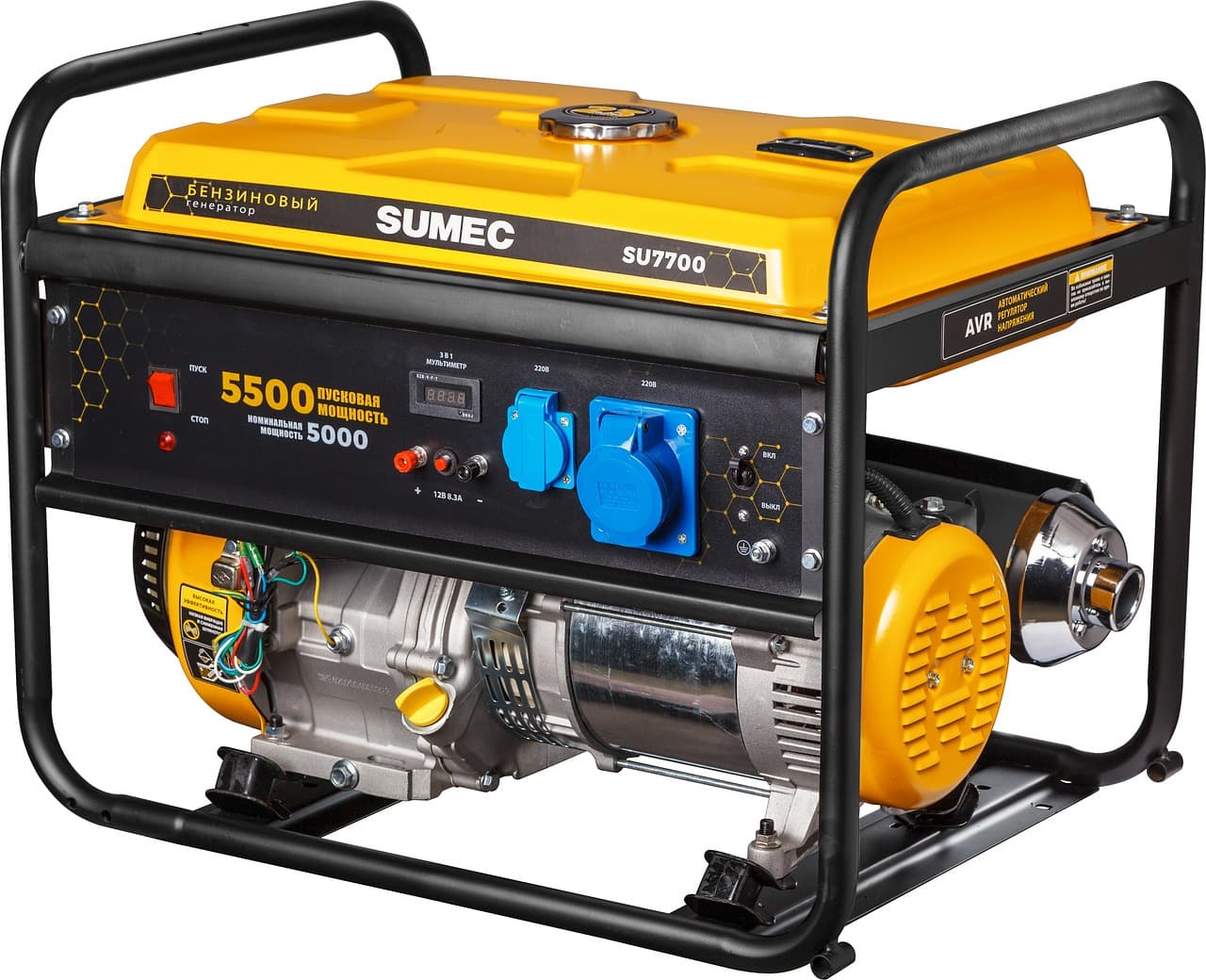
Portable Power Station vs Gas Generator: The 5-Year Math
A line-by-line five-year cost comparison of a LiFePO4 power station and an inverter generator, with the outage-hours break-even point spelled out.
By the Ask Versa AI Editorial Team. Ask Versa AI content is AI-assisted and editorially reviewed before publishing; specs and review sentiment are pulled live from Amazon.
Portable Power Station vs Gas Generator: An Engine and a Tank
A gas generator is a small engine bolted to an alternator: fuel goes in, electricity comes out, and it runs as long as you keep feeding it. A power station is a tank: you fill it from a wall socket before the outage, or between outages, and drain it while it lasts. Engine versus tank explains every line of the five-year math below, including the parts that surprise people.
The market data makes this a fair fight now. The September 2026 bestseller scan shows Anker's 2,010Wh SOLIX S2000 at $649, a limited deal that works out to about 32 cents per Wh, and BLUETTI's 1,152Wh AC180 at $449, about 39. A 3,000W-class inverter generator typically runs $500-700. The sticker prices have converged. The ownership costs have not.
The Five-Year Ledger
Assume a typical suburban buyer: a fridge, a router, some lights, phones, maybe a CPAP, and about 50 hours of outages a year.
| Line | 2kWh-class LFP station | 3,000W-class inverter generator |
|---|---|---|
| Upfront | $649 (SOLIX S2000 limited deal) | $500-700 |
| Energy or fuel per hour of use | about $0.35 per full recharge (2kWh at roughly $0.17/kWh, EIA residential average) | $0.35-0.70 (0.1-0.2 gal/hr at moderate load, per manufacturer specs) |
| Maintenance | none | an oil change or two a year |
| Noise | silent under light loads; quietest units advertise 26 dB charging | 48-58 dBA at quarter load, per spec sheets |
| Where it runs | any room in the house | outdoors only, well away from windows |
| Lifespan | 3,000-plus cycles to 80% (LiFePO4) | thousands of engine hours with maintenance |
Over five years at that duty, the generator costs roughly $700-900 all-in once fuel and oil are counted. The station lands near $655 with recharge electricity included, and its maintenance schedule is a blank line. The dollar gap is small either way, which is exactly why the decision should not be made on dollars alone. What the table cannot price is everything in the next section.
The Costs That Do Not Fit the Table
Noise first, because it compounds. An inverter generator at 48-58 dBA is a running appliance you hear all night, parked as far from the bedrooms as the extension cord allows. A station is silent, indoors, three steps from the fridge.
Then fumes. Portable generators kill dozens of Americans through carbon monoxide in a typical year, a warning the Consumer Product Safety Commission has repeated for two decades. They run outdoors, far from windows, never in an attached garage. A station emits nothing and can sit in the kitchen.
Storage is the quiet cost. Gasoline goes stale within months, so generator ownership means stabilizer and fuel rotation, plus the cans themselves taking up garage space and the occasional 20-minute drive to refill them after a storm warning. The classic failure arrives on the worst day: the machine that will not start after a year in the garage. A LiFePO4 station holds its charge for months and starts with a button, every time.
Where the Generator Still Wins
Unbounded runtime is the engine's one honest advantage, and some loads need it. A well pump's startup surge, a furnace fan through a week-long ice storm, a window AC through a heat wave: hours of sustained four-digit wattage drain any station daily, and a 2kWh tank refills from the wall only while the grid is up. When the outage outlasts the tank and there is no car or panel available to refill it, gas keeps running as long as you keep feeding it. Our outage survival guide covers how to stretch the tank when you go the other way.
The Hybrid Move Most Owners Miss
The two technologies stack, and the combination beats either alone. A station like the BLUETTI AC180 accepts up to 1,440W of AC input, so an hour or two of generator runtime fills the tank, and the remaining 22 hours of the outage run silent and indoors. The generator becomes a recharge source instead of a runtime source: fuel use drops, noise shrinks to a couple of daytime hours, and the fridge and CPAP stay inside where the fumes can never reach them. Owners who set this up rarely go back to all-night generator duty.
A panel extends the same logic one step further from the pump. Five good sun hours at a realistic 60 to 70% of rating turn a 200W panel into roughly 550-700Wh a day, most of a fridge-and-router day, no engine started. Solar cannot outrun an air conditioner, but it can keep a modest load alive indefinitely, which is exactly the duty most outages demand.
About Fifty Hours a Year Draws the Line
Under roughly 50 outage-hours a year, which covers most suburbs, the station wins the five-year cost, wins every night's sleep, and does double duty on camping trips a generator will never take. It also resells more easily, since a lightly cycled LFP pack has spent a sliver of its rated life while a used engine invites the same suspicion as a used car. If your answer to "how many hours was I dark last winter?" is under 50, buy the tank and spend the difference on a solar panel.
Sustained whole-home duty is the exception. Well pumps, multi-day ice storms, heat waves that run air conditioning around the clock: that work still belongs to an engine, or to the hybrid pairing above. Counting your own outage hours first is the whole method, and whether the math lands on batteries or gas, the worth-it framework and the runtime formulas behind this table are both worth ten minutes before you spend anything.
Frequently Asked Questions
Can a power station power an entire house?
Not the whole panel. A 2kWh unit covers a fridge, router, lights and phones for about a day, and whole-home backup means 4kWh-plus home units wired through a transfer switch, a different price class entirely. Size your real loads first; the math takes ten minutes and changes the answer.
Is a generator cheaper than a power station?
Upfront, often yes: 3,000W-class inverter units start around $500. Over five years at light outage duty the totals nearly converge, and after that the fuel, oil and noise costs land on the generator's side of the ledger every year.
Can you run a generator indoors?
Never, including attached garages and porches near windows. Carbon monoxide from portable generators kills dozens of people in the US every year, per the CPSC. Run it outside, far from openings, with the exhaust pointed away from the house.
How long do generators last compared to power stations?
Different clocks. Engines measure life in hours, thousands of them with oil changes. LiFePO4 stations measure it in cycles, 3,000-plus to 80%, which outage duty spends slowly. Both outlast a decade of typical backup use in practice; the electronics around the cells or the carburetor usually fail before the core does.
Your outage history is the one input this math needs, and only you have it. Tally the dark hours from your last two winters, then let Versa AI shortlist the two stations that clear your load with the five-year costs already attached.
Shop smarter with Ask Versa AI
Get occasional product-comparison tips and new features as they ship. No spam.