Best Wireless Earbuds for Running in 2026: Fit Comes First
Why running earbuds fall out, which fit designs survive a 10K, and the 2026 models worth your money from $30 to $250, with sweat ratings explained.
By the Ask Versa AI Editorial Team. Ask Versa AI content is AI-assisted and editorially reviewed before publishing; specs and review sentiment are pulled live from Amazon.
Every runner owns a pair of perfectly good earbuds that are useless for running. They sound great on the couch and then work loose at kilometer three, and the problem is almost never sound quality. It's mechanics: your jaw swings, your stride lands, sweat breaks the seal, and a stem-style bud has no answer to any of it. Buy for the fit design first and the sound second, because sound quality never saved a bud that already popped out.
Wirecutter's 2026 running-headphones guide draws the same map: ear hooks and wings win for stability, and its top picks lean on exactly those designs. Here's how the fit systems rank, and the models that use them well this year.
The three fit designs, ranked for running
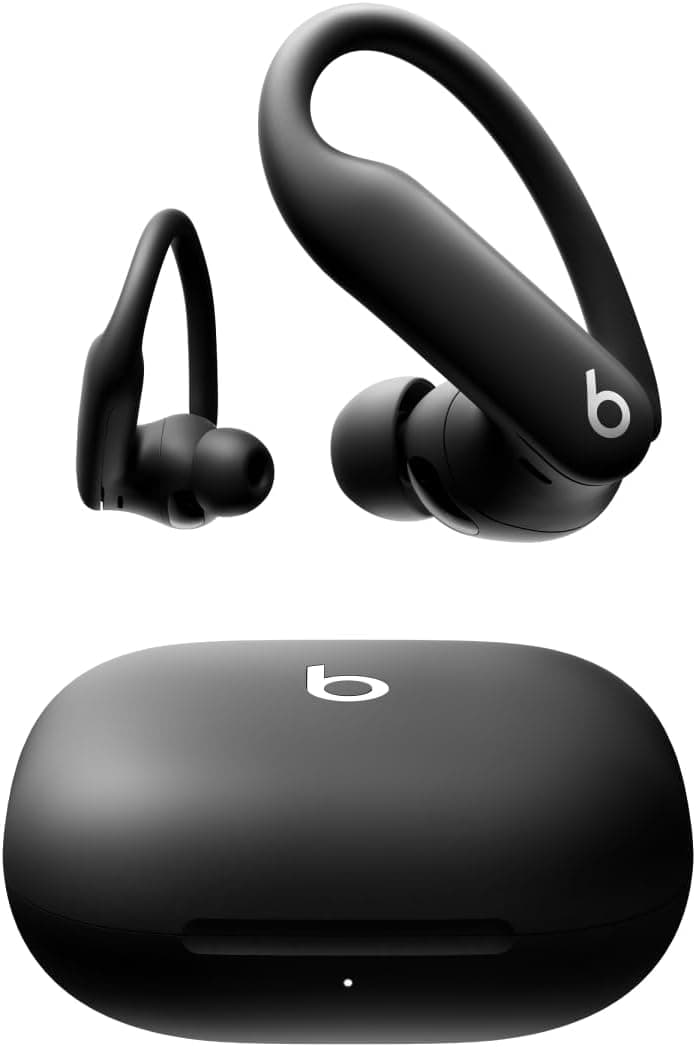
Ear hooks: the gold standard. A loop over the ear gives the bud two contact points instead of one, so jaw movement can't work it loose. The Beats Powerbeats Pro 2 is the category's reference implementation: Runner's World credits its flexible earhooks and five tip sizes with keeping you focused on the run rather than the fit, and the JDD running-gear blog calls it the gold standard that stays locked in "through sprints, hill repeats, and burpees." It carries a heart-rate sensor, works in the Apple ecosystem, and runs about $250.
Wings: the lighter compromise. A small rubber wing braces against the ear's inner ridge. The Beats Powerbeats Fit is this year's example, with Wirecutter liking the same recipe as the Pro 2, great sound, IPX4 water resistance, heart-rate monitoring, in a smaller, lighter package. One honest note from The Run Testers: the Fit isn't a major upgrade on the older Fit Pro, so if you find last year's model discounted, take it.
Everything else: buyer beware. Stem buds and true-wireless pebbles rely on eartip friction alone. Some runners get lucky with shallow ears. Most discover the failure mid-tempo. If you love a pair in this class, check whether the manufacturer sells wing accessories before committing.
Sweat ratings: what IPX4 and IP55 actually tell you
The letters matter more than the marketing. IPX4 means splash-resistant: sweat and rain are fine, a shower is not. IP55 adds dust protection and jets of water from any direction, a step tougher. Every pick here clears the running bar: IPX4 on both Beats models, and the budget pick below goes further at IP55.
The budget pick that embarrasses the flagships
The JLab Go Sport+ costs roughly $30 and gets the fundamentals right: earhook fit, an IP55 rating that beats the premium picks on sweat, and Comfortalife's 2026 roundup noting 9+ hours per bud, which beats the per-charge runtime of most $200 pairs. Sound quality is honest but ordinary, and there's no heart-rate sensor. As a first pair of running buds, or a pair that lives in the gym bag, it's the best value in the category, full stop.
A word on open-ear designs
Road runners have a fourth option: bone-conduction and open-ear designs that leave the ear canal free to hear traffic. They sacrifice bass and are the wrong tool for track work, but for anyone running on roads before sunrise, situational hearing is a safety feature no in-ear bud can offer. They're a specialty pick, not a default.
The shortlist
| Model | Fit | Rating | Standout | Street price |
|---|---|---|---|---|
| Beats Powerbeats Pro 2 | Ear hooks | IPX4 | Heart-rate sensor, Apple ecosystem | ~$250 |
| Beats Powerbeats Fit | Wings | IPX4 | Lighter, cheaper Pro 2 sibling | ~$180-200 |
| JLab Go Sport+ | Ear hooks | IP55 | 9+ hour battery at a $30 price | ~$30 |
If you train hard and think in ecosystems, the Powerbeats Pro 2 is the buy-once answer. If you want a dedicated pair for sweaty intervals and refuse to spend three figures, the JLab Go Sport+ is the sensible one, and its IP55 rating means it shrugs off abuse the expensive pairs aren't rated for.
Frequently Asked Questions
Why do my earbuds fall out when I run but not when I walk?
Running jaw: each footstrike and breath cycles your temporomandibular joint, which flexes the ear canal and breaks an eartip's seal. Over-ear hooks and wings hold position through that cycle; friction-fit buds don't.
Is IPX4 enough for running?
Yes. IPX4 covers sweat and rain, the real exposure. IP55 adds dust and higher-pressure water, useful for trail grit and post-run rinsing, but no running scenario requires full waterproofing.
Do ear hooks get uncomfortable on long runs?
Well-designed hooks spread pressure around the ear's rim and disappear. Cheap rigid hooks cause hot spots past the hour mark, which is the main reason to prefer the established designs over no-name hook buds.
Are heart-rate sensors in earbuds accurate?
For trend-tracking, useful. For zone training, a chest strap still wins. Treat in-ear readings as a sanity check on effort rather than a replacement for a dedicated sensor.
Got it down to two pairs? Versa AI compares their specs and what owners say after a few months of sweat.
Shop smarter with Ask Versa AI
Get occasional product-comparison tips and new features as they ship. No spam.