Ecovacs X11 vs Roborock Saros 10R: Measure Your Sofa First
The Ecovacs X11 OmniCyclone and Roborock Saros 10R split on mop design and body height, not suction. Here is which one fits your floors and furniture.
By the Ask Versa AI Editorial Team. Ask Versa AI content is AI-assisted and editorially reviewed before publishing; specs and review sentiment are pulled live from Amazon.
Two robot vacuums anchor the top of the 2026 flagship market, and they disagree about almost everything except price class. The Roborock Saros 10R carries a $1,599.99 list price and was selling for $899.99 on Amazon in October 2026, a 44 percent cut that Lifehacker placed in its all-time-low band of $899 to $1,099. The Ecovacs Deebot X11 OmniCyclone lists at $1,499.99 per PCMag and has spent the year bouncing between $699 and $899 on the street, with Mashable logging $699 on August 18 as its lowest price ever. RTINGS calls the Saros 10R the best robot vacuum they have tested. On paper that is a rout, except the X11 keeps winning converts on r/RobotVacuums, including one thread titled bluntly enough: X11 replaced my Saros 10R.
The disagreement is structural, and it starts before suction numbers enter the conversation. Roborock built one of the thinnest flagship bodies on the market and hung two spinning mop pads underneath it. Ecovacs wrapped a conventional-height chassis around a roller mop that rinses itself with fresh water mid-run, then paired it with a dock that skips dust bags entirely. Body height and mopping route are the two decisions that actually separate these machines. The 19,500 versus 22,000 Pa gap is closer to a rounding error, and this post spends a section explaining why.
If you are not yet sure you need a flagship dock at all, our robot vacuum buying guide covers the tiers below these two. If you are choosing between the 10R and something other than the X11, the Roborock Saros Z70 vs Dreame X50 Ultra comparison handles that fork.
Spec Comparison
| Spec | Deebot X11 OmniCyclone | Roborock Saros 10R |
|---|---|---|
| List price | $1,499.99 (PCMag) | $1,599.99 |
| 2026 street range | $699 to $899 | $899 to $1,099 |
| Suction | 19,500 Pa, 18 L/s airflow (ECOVACS) | 22,000 Pa |
| Body height | Standard flagship height | 3.14 in, among the thinnest flagships (Roborock) |
| Navigation | AIVI 3D, LiDAR plus AI vision | StarSight 2.0 solid-state LiDAR, no turret |
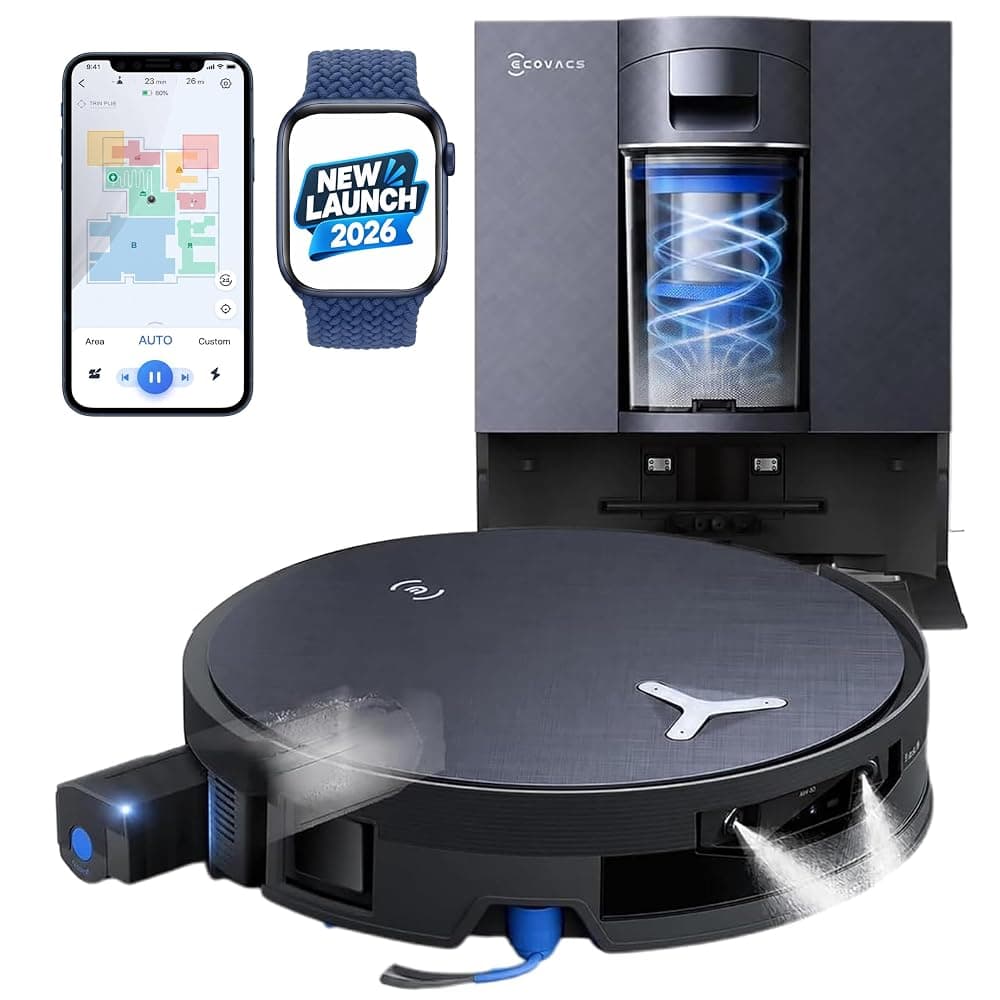
| Mop system | OZMO ROLLER 2.0, 200 rpm, continuous fresh water | Dual spinning pads, liftable, swing outward |
| Brush | ZeroTangle 3.0 | Zero-Tangle rubber brush |
| Threshold crossing | Higher clearance per owner reports | Chassis lifts about 4 cm (Vacuum Wars test) |
| Dock | OmniCyclone bagless, ~60 days, 167°F wash, dual detergent tanks | Dock 4.0, bagged auto-empty, 176°F pad wash, auto detergent |
Two rows in that table do almost all the deciding, and they are not the suction row. Everything below walks through them in the order you should weigh them: height first, mop system second, dock consumables third.
The Sofa Question Comes Before Any Spec
Three point one four inches is roughly 8 cm, and that single number settles more purchases than any Pa figure on the box. Roborock says the 10R is one of the thinnest flagships it has built, thin enough to pass under most sofas and beds that block a normal robot. The StarSight 2.0 navigation suite is solid-state, meaning there is no raised LiDAR turret to add height or catch on bar stools. That matters for a specific reason: our buying guide carries a standing caution that Roborock's pop-up turrets sometimes fail to retract and ram under low furniture. The 10R simply does not have that failure mode. There is no turret to retract.
The X11 takes the opposite trade. Its OZMO ROLLER mop lives in a housing at the front of a conventional-height body, and its AIVI 3D navigation stacks AI vision on top of LiDAR. Ecovacs never designed this machine to disappear under your couch; it was designed to mop better than the machines that can.
So the first branch costs nothing to evaluate. Grab a tape measure. If the gaps under your sofa, bed, and TV console sit below about 10 cm, the Saros 10R reaches debris the X11 physically cannot, and no mopping system fixes that. Homes with mostly open clearance can move on to the harder questions.
A Roller Against Two Spinning Pads
This is the genuine philosophical fork in the comparison, and the two designs could not be more different.
The X11 mops with water it has not used yet
The OZMO ROLLER 2.0 is a 200 rpm cylinder mop that ECOVACS continuously sprays with fresh water while a squeegee pulls the dirty runoff into a separate collection path. The pitch is process purity: the surface touching your floor at any moment is being rinsed as it works, so the X11 is not dragging a progressively dirtier cloth across your kitchen. At the dock, hot water at roughly 167°F (75°C) washes the roller, hot air dries it, and two onboard detergent tanks let the machine switch cleaning fluids by task. There is a battery dividend too. The PowerBoost GaN charger returns about 6 percent of battery in the roughly 3 minutes a roller wash takes, per ECOVACS, which keeps mid-cleaning dock visits from stalling a run.
The 10R washes its pads at 176°F and swings them where rollers cannot reach
The Saros 10R carries two flat spinning pads that press and scrub, lift out of the way on carpet, and swing outward to press against baseboards and corners, the spots a fixed-width roller must edge up to rather than hug. Dock 4.0 finishes the loop: it empties dust into a bag, washes the pads with 80°C (176°F) water, dries them with hot air, and dispenses detergent automatically. Vacuum Wars measured the chassis lifting itself over thresholds of about 4 cm, which is how a mopping robot survives a home that is not one continuous slab of hardwood.
Here is the part that keeps the comparison honest. RTINGS measured the 10R ahead of the X11 on stain removal, on hard-floor cleaning generally, and on obstacle-avoidance reliability. The roller's fresh-water logic wins the argument on paper; the pads win the lab test. Weigh measured results above design stories, and the 10R takes the mopping crown on evidence. Weigh the fact that a roller never re-soaks itself in its own dirty water across a long run, and the X11 has the better process. Both positions have defenders among owners, which is exactly why the branches further down hand each of them specific homes instead of one crown.
22,000 Against 19,500 Pa Is the Row to Ignore
Every flagship comparison tempts you to read the suction row first. Resist it here. Both machines far exceed the suction that loosens debris from a hard floor, and the X11 pairs its 19,500 Pa with 18 L/s of airflow per ECOVACS, a spec that moves dirt through the pipe and arguably matters more than peak Pa. RTINGS gives the 10R its hard-floor cleaning edge on measured results, not on the 2,500 Pa delta. If the suction numbers were the decision, the 10R would win every home in the country. It does not, and r/RobotVacuums is full of the reasons why.
The Dock Decides Your Consumables Bill
The OmniCyclone dock is the X11's most distinctive feature: no dust bags at all. ECOVACS claims roughly 60 days between empties and says the design saves more than 25 bags over its life compared with a bagged dock. That is real money and real convenience, with one owner-side caveat our buying guide already flags for the brand: Ecovacs front wheels have a history of breaking in ways that are awkward to self-replace, and an overpacked dustbin can defeat the auto-empty cycle. A bagless dock makes the second failure mode more annoying, because the bin you forgot to empty is the whole system.
The 10R's Dock 4.0 keeps the conventional bag (an ongoing purchase) but automates everything else, including detergent dispensing. The X11's dual detergent tanks hold two fluids but the machine manages them itself at the dock. Neither approach is a knockdown win. Bag-averse buyers get a real answer from Ecovacs here; buyers who want the dock to handle every consumable except bags get theirs from Roborock.
Branch by Branch, One Machine per Home
The community never settled this fight, and a single verdict would be dishonest. Specific homes, though, get specific answers.
Furniture with under 10 cm of clearance
The Saros 10R, and it is not close. A 3.14-inch body with no turret cleans floor the X11 cannot physically enter. If your sofa sits low, this branch outranks every other consideration on the page.
Homes cut up by thresholds and floor strips
The X11, on the weight of owner testimony. r/RobotVacuums users who ran both complain that the 10R's brush and mop lift height and its threshold crossing fall short of the X11's, even with Vacuum Wars confirming the 10R's chassis clears about 4 cm on its own terms. Dense transitions between rooms are the most common reason a thin flagship stalls mid-run, and owners consistently report the X11 handles them better.
Large hard floors, mopped daily
The X11, by design logic and by the testimony of switchers. A roller rinsed with fresh water for the length of an 80-square-meter run does not redistribute yesterday's mop water the way a cloth pad can, and the X11 replaced my Saros 10R thread on r/RobotVacuums cites suction and mopping as the reasons its author switched. The honest caveat: RTINGS's stain-removal measurements still favor the 10R, so evidence-first buyers have grounds to flip this branch. Both readings are defensible; only you know how much of your floor is one uninterrupted hard surface.
Pets, cables, and cluttered floors
The Saros 10R. Both machines run tangle-resistant rubber brushes, the X11 with ZeroTangle 3.0 and the 10R with its Zero-Tangle brush, so hair wrap is roughly a wash. Avoidance is not: RTINGS rates the 10R's obstacle reliability clearly ahead, and a robot that steers around the water bowl instead of scattering it is worth more than any suction figure. For a deeper look at the shedding-specific field, our piece on robot vacuums for pet hair covers it.
A budget capped near $800
The X11 alone. Its 2026 street range runs $699 to $899, with Mashable recording $699 as the low watermark in August. The 10R's best recorded price is $899, per Lifehacker in October, and it spends most of its time above that. Under $800 there is exactly one machine in this comparison on the shelf.
Where the Evidence Leaves the Tie
For a home we know nothing about, the lean goes to the Saros 10R. RTINGS ranking it the best robot vacuum they have tested, its avoidance record, and its stain-removal numbers cover the most failure modes a robot can have, and the thin body fits the widest range of furniture. The X11 is the stronger pick in three specific cases: threshold-heavy floor plans, large uninterrupted hard floors mopped daily, and budgets capped near $800. That is not symmetry; that is one default and three named exceptions. r/RobotVacuums remains split down the middle between these two, which says less about the machines than about how differently our homes are built.
Frequently Asked Questions
Is the Roborock Saros 10R worth the $1,599.99 list price?
No. It has sold between $899 and $1,099 through 2026, and Lifehacker's October report tracked $899.99 on Amazon at 44 percent off. Nothing about the machine changes between the sale price and the list price except your bank balance. Wait for the band.
Is the Ecovacs X11 OmniCyclone dock really bagless?
Yes. The OmniCyclone dock compresses dust into an internal bin ECOVACS says holds about 60 days of debris, saving more than 25 dust bags over time. The owner-side caveat: Ecovacs bins that get packed too tight can defeat the auto-empty cycle, so the 60-day figure assumes you empty it on schedule rather than late.
Which one handles pet hair better?
Both fit tangle-resistant rubber brushes, so the brush story is a tie. The differentiator is obstacle avoidance, where RTINGS rates the 10R ahead, and avoiding the food bowl and the stray toy matters more for pet households than raw suction. Pet-heavy homes should lean Saros 10R.
Can the Saros 10R clean under my sofa?
Measure the gap. At 3.14 inches (about 8 cm) with no LiDAR turret, it fits under most sofas and beds that stop a standard flagship. Anything with less than about 8 cm of clearance blocks it like any other robot, so check before you buy on that basis.
Which mops better, the roller or the spinning pads?
On measured stain removal, RTINGS gives it to the 10R's pads. On process, the X11's roller mops with continuously rinsed fresh water and never re-soaks in its own runoff, which owners of large hard floors report as the better daily experience. The lab result favors Roborock; the long-run design argument favors Ecovacs.
Every branch above assumed you know your own floor plan, thresholds included. For the stretch of the decision a tape measure cannot settle, paste both Amazon listings into Versa AI and it hands back one report with each machine's spec wins tallied and its complaint patterns drawn out, so your branch of this decision gets settled on evidence from both columns rather than whichever launch video you watched last.
Shop smarter with Ask Versa AI
Get occasional product-comparison tips and new features as they ship. No spam.