Resin 3D Printing for Beginners: The Printer Is Cheap
The printer on sale is the cheapest part of resin printing: safety gear, ventilation, wash and cure, resin, and IPA add hundreds. The honest beginner budget.
By the Ask Versa AI Editorial Team. Ask Versa AI content is AI-assisted and editorially reviewed before publishing; specs and review sentiment are pulled live from Amazon.
The $200 Printer Is Not a $200 Hobby
Resin 3D printing has a pricing trick that catches every newcomer. The printer itself is the cheapest component of the whole setup, often the least expensive thing on the desk, and the sales pages make it look like the entire cost. It is not. A functional, safe resin workflow needs a wash and cure station, gloves, a respirator, ventilation, resin, and isopropyl alcohol, and the r/resinprinting community is uncommonly honest that the printer was "not the bulk of the spending in the end."
The classic beginner thread on r/resinprinting lays out the real list: a grow tent, a fan and vent system, silicone mats, a wash and cure unit, and resin, on top of the printer itself. The experienced users who answer "what should I buy first" consistently tell newcomers to hold back money from the printer and reserve it for the rest of the setup. The community's stock answer to "best affordable resin printer" starts with a counter-question: "Does your budget include purchasing PPE, ventilation equipment, wash and cure station, etc.?"
This guide gives you the honest budget before you hit buy, then names the printers worth it at each level, because the second part only makes sense once the first part stops being a surprise.
Before the Printer: Is Resin Even the Right Choice?
Resin printing produces detail that filament (FDM) printing cannot match, which is why miniatures, jewelry, and figurine makers choose it. It does that with liquid photopolymer resin cured by UV light, and that resin is genuinely hazardous to handle. Tom's Hardware's resin printer guide says it plainly: resin requires gloves and a mask to handle, and the site recommends beginners or anyone with young kids consider FDM first. The r/3Dprinting thread from a high-school chemistry teacher is blunter still, calling resin printing's chemicals "pretty toxic" and "known or suspected to cause cancer," and insisting on a separate room, gloves, an FFP3 mask, and its own ventilation.
None of that means resin printing is off-limits. It means the setup cost is a safety budget, not an upgrade option, and it is non-negotiable. If you live in a one-bedroom apartment with no ventable window and no separate space, the honest answer from the community, including a well-known r/3Dprinting Stack Exchange thread, is to reconsider until you have a room you can be out of during prints.
The Real Beginner Budget
Here is the arithmetic for a first setup, at 2026 street prices:
That is roughly $450-750 total for what the ads present as a $200-300 purchase. The printer is 35-45% of the real cost, which is why "I got the printer for $280" turns into "$700 later." This is not a reason to quit. It is the reason to budget correctly and to buy a slightly cheaper printer to fund the safety gear.
The Three Starter Printers Worth It in 2026
The all-round budget pick: Elegoo Mars 5 Ultra (9K)
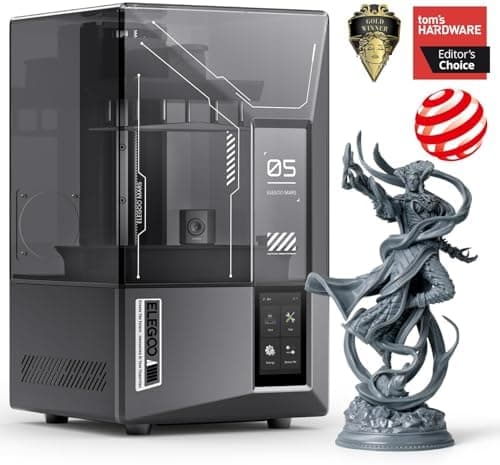
The Elegoo Mars 5 Ultra is the printer the beginner communities keep landing on in 2026. It is under $300, which 3dwithus calls an easy purchase to justify for beginners and power users alike, and it tops their list of the best desktop resin printers. Its 9K resolution is well past the detail most miniatures need, and Elegoo's ecosystem, with wash and cure stations and a huge knowledge base, is the safest place for a first-time buyer to be. If you want one printer that will not embarrass you, this is it.
The cheapest credible option: Anycubic Photon Mono 4
The Anycubic Photon Mono 4 is the entry-level credible resin printer, around $169, and the r/resinprinting beginner threads still carry a long Anycubic streak: "Anycubic photon 3 was my first printer. Had success the first time I touched it." The Photon Mono series is what the community recommends for the specific reason that rookie mistakes happen, and "best they happen on something that won't hurt the wallet too much." The trade is a smaller build plate and slower prints, which is fine for learning.
The bigger-plate step up: Elegoo Saturn 3 Ultra
The Elegoo Saturn 3 Ultra is CNET's pick for best resin 3D printer overall and the step up for anyone who knows they will print in bulk. The larger build plate prints a miniature army in one run, and the r/resinprinting advice for first-time buyers with a real budget is blunt: "Just get a Saturn Ultra 4k, and put aside the rest for materials and the rest of your setup." The Saturn class is where the "detail plus volume" crowd lands, and Elegoo's wash-and-cure ecosystem follows you up.
There is one caution that follows all three. In 2026, the r/resinprinting recommendation thread flags the HeyGears Reflex line as excellent but semi-locked, with a closed ecosystem that limits third-party resin use. For a beginner, the open Elegoo and Anycubic ecosystems are the safer bet, because the community's troubleshooting advice and cheap third-party resin apply to them.
The Resolution Trap Beginners Fall Into
Every spec sheet pushes "8K" and "12K" as if higher is always better, and it is not. As the r/PrintedMinis thread on beginner printers warns, "an 8k big printer can have lower resolution than a 4k smaller one," because resolution is measured across a screen area. A 4K printer on a small plate can produce finer detail than an 8K printer on a large plate. For miniatures under 40mm, a 4-6K machine is already more resolution than the human eye reliably sees at the scale of a printed figure. Do not pay the premium for an 12K plate unless you are printing larger pieces where the plate area actually matters.
The Safety Rules That Are Not Optional
Frequently Asked Questions
Is a resin 3D printer good for beginners?
Yes, for someone who wants fine detail and is prepared to handle the safety setup. The Elegoo Mars 5 Ultra and Anycubic Photon Mono 4 are the community's beginner picks. But resin requires gloves, a respirator, and real ventilation, and Tom's Hardware recommends FDM for total beginners or households with young kids.
How much does a resin 3D printer setup cost in total?
About $450-750 for a working first setup, versus the $170-300 the printer alone advertises. The wash and cure station, resin, PPE, and ventilation account for the majority. Beginners should budget the safety gear before picking a more expensive printer.
Do I need ventilation for a resin 3D printer?
Yes, and it is the one non-negotiable. Carbon filters reduce odor but do not remove the fumes. The serious sources all agree the only safe setup exhausts outside, with the printer in a room you are not in during prints. Water-washable resin does not remove this requirement.
What is the best resin printer for a beginner in 2026?
The Elegoo Mars 5 Ultra under $300 is the safest all-round pick, with the Anycubic Photon Mono 4 as the cheapest credible entry and the Elegoo Saturn 3 Ultra as the bigger-plate step up. All three are open ecosystems with a large community and cheap third-party resin.
Is resin printing safe indoors?
Only with proper controls: ventilation to the outside, gloves, a respirator rated for organic vapors, and uncured resin and wash water treated as hazardous waste. The community is clear that resin printing is a chemical hobby and that an apartment with no ventable window is the wrong environment for it.
The Honest First Purchase
Buy a slightly cheaper printer than you can afford and spend the difference on the wash and cure station, the PPE, and the ventilation, because those are what decide whether the hobby works at all. The Elegoo Mars 5 Ultra at under $300, with the budget set aside for the rest, is the setup the beginner communities keep describing. When you are down to two printers, compare them in Versa AI for the owner-reported failure and setup complaints that the spec sheet hides.
Shop smarter with Ask Versa AI
Get occasional product-comparison tips and new features as they ship. No spam.